
Location-based XR: walking becomes the experience
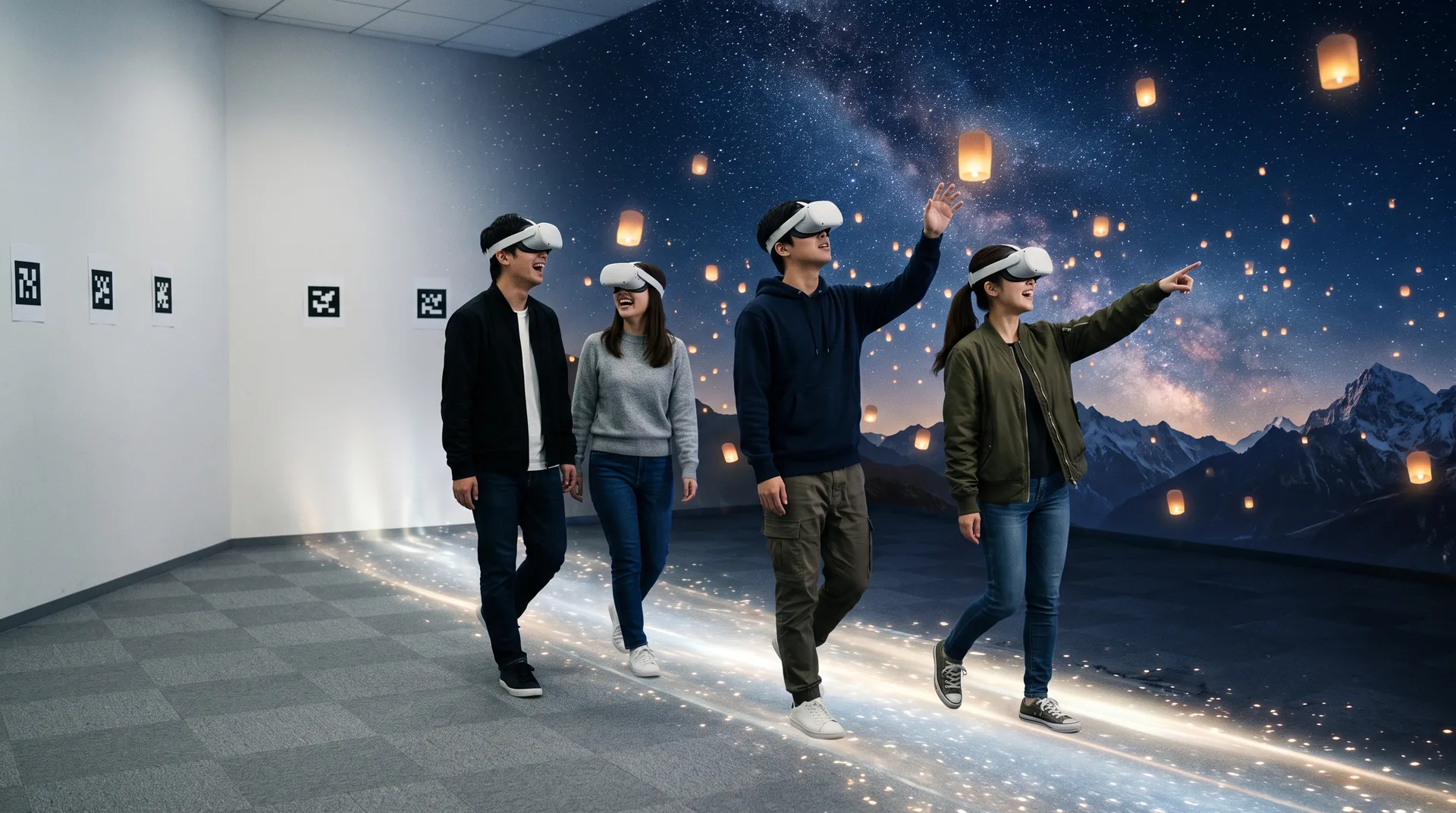
Put on a headset and walk on your own two feet. The people you came with are right beside you. The space in front of you has already turned into another world. All the venue needs is a room big enough to walk around in and about ten markers stuck on the walls. At IZUTSUYA, we call this kind of experience, which combines place and human movement, "location-based XR," and we are developing it as a pillar of our entertainment business.
This business at a glance
- Location-based XR is XR that you go to a venue for and experience on foot. You do not watch a screen. You step into the story.
- The best part is that you are not immersed alone: you walk through the same world as the people you came with.
- The venue needs no construction work. Just stick about ten QR markers on the walls and the room becomes a venue.
- IZUTSUYA handles everything from planning and producing to capturing places and people in 3D, developing the experience, and running it.
- Our strength is that we can bring real places and the movement of real people into the experience just as they are.
- We are already involved in several titles and will announce them one after another, starting in the second half of 2026.
What is location-based XR?
Location-based XR is XR (the umbrella term for VR, AR, and MR) that you go to a facility or venue to experience. It is also known as location-based entertainment (LBE). Unlike games played at home, it has participants walk around a space of a set size on their own two feet.
Each step you take carries you the same distance in the world you see. Turn around and you see what is behind you. Crouch down and you see what is at your feet. Because the movement of your body and the world before your eyes match exactly, it does not feel like watching a video. It feels like being there.
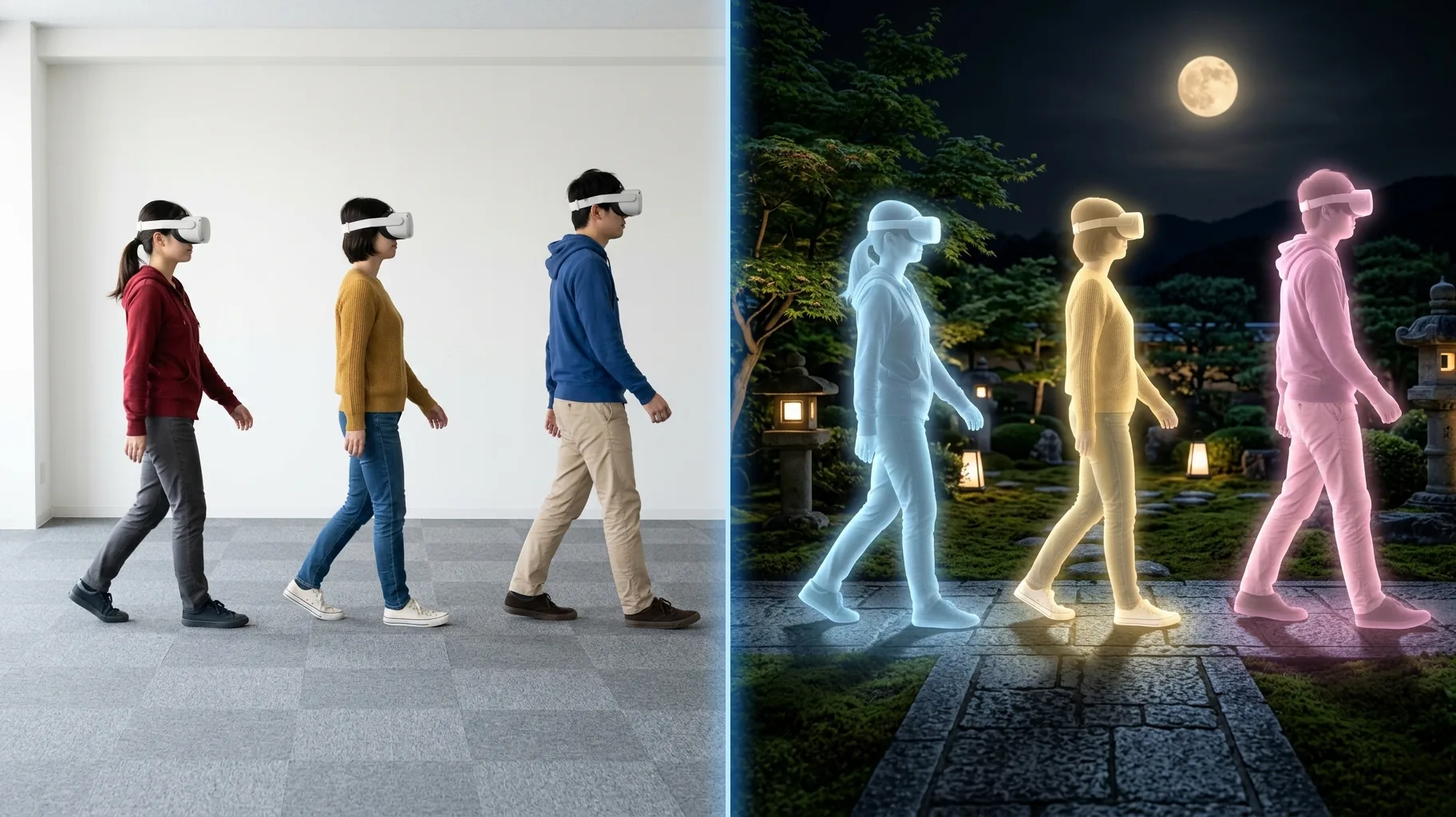
We call an experience location-based XR when it has all three of the following.
- Place: there is a real space to walk around in, set up for the experience.
- Human movement: participants' body movements are reflected directly in the experience.
- Sharing: people in the same space can experience the same world together.
What makes it fun
What sets it apart from video and exhibitions is that the people taking part are no longer spectators.
01 From "watching" to "stepping in"
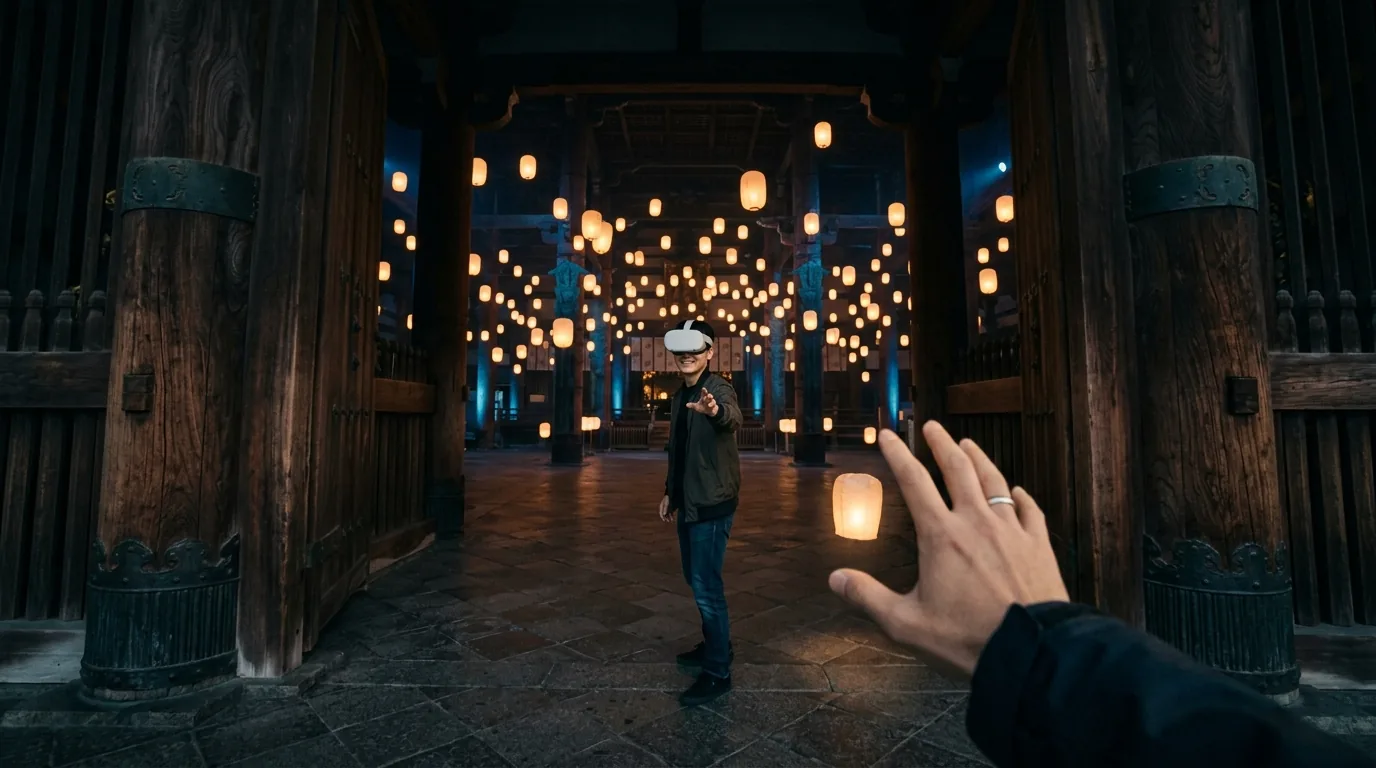
Films and exhibitions have always been things you look at from the outside. In location-based XR, you walk through the story. You pass through a gate, turn a corner, and come out into a great hall. You take in that distance and that scale with your own body.
02 The people you came with are beside you
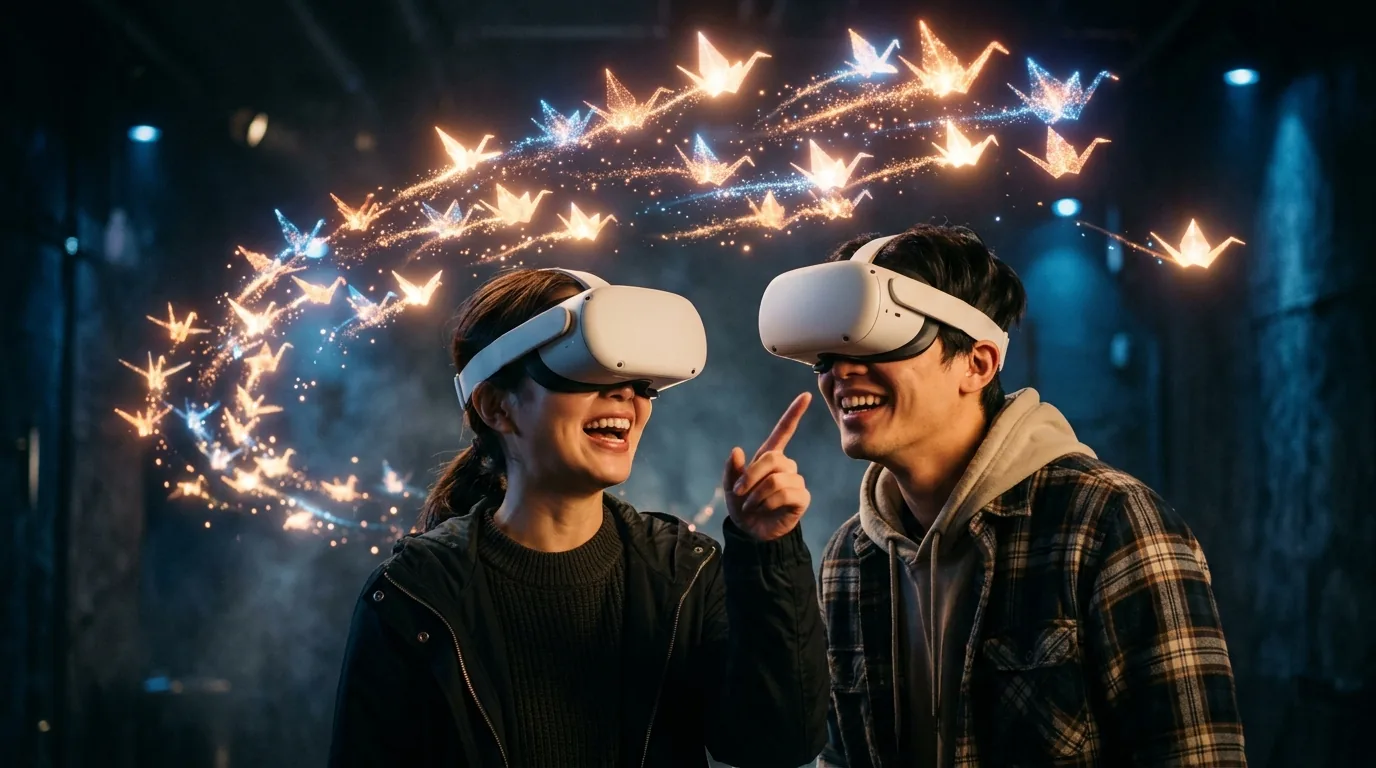
You may have the impression that putting on a headset leaves you all alone. In location-based XR, your family and friends appear inside the experience too. You point things out to each other and are surprised by the same things. The experience runs right through to the trip home, when you can ask, "Did you see that part?"
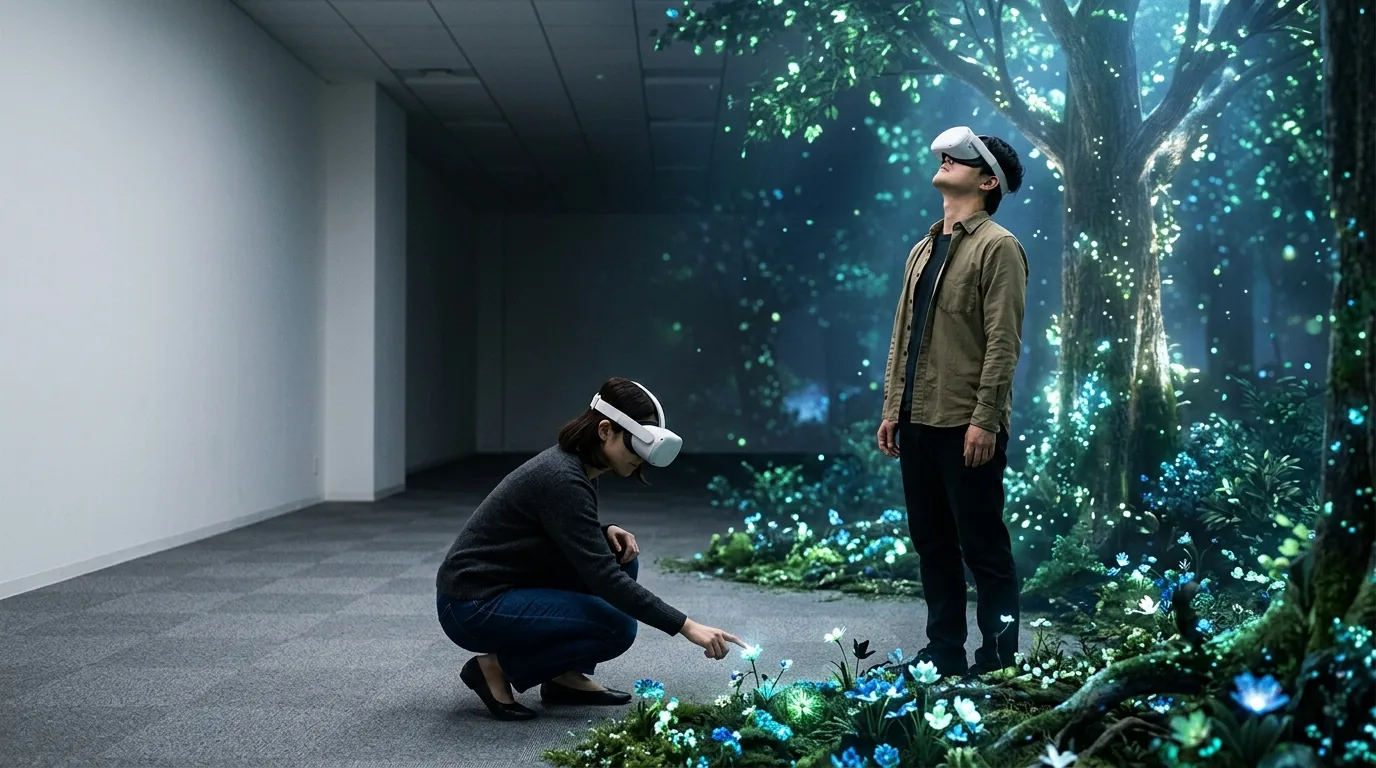
03 Moving your body makes it a memory
You walk, lean in for a closer look, gaze up. An experience you gain by moving your own body ends up closer to the memory of a place you have been than to a video you have watched.
Examples of what you could experience
It works with any subject. With a room big enough to walk around in, we can bring experiences like these to life.
LIVE
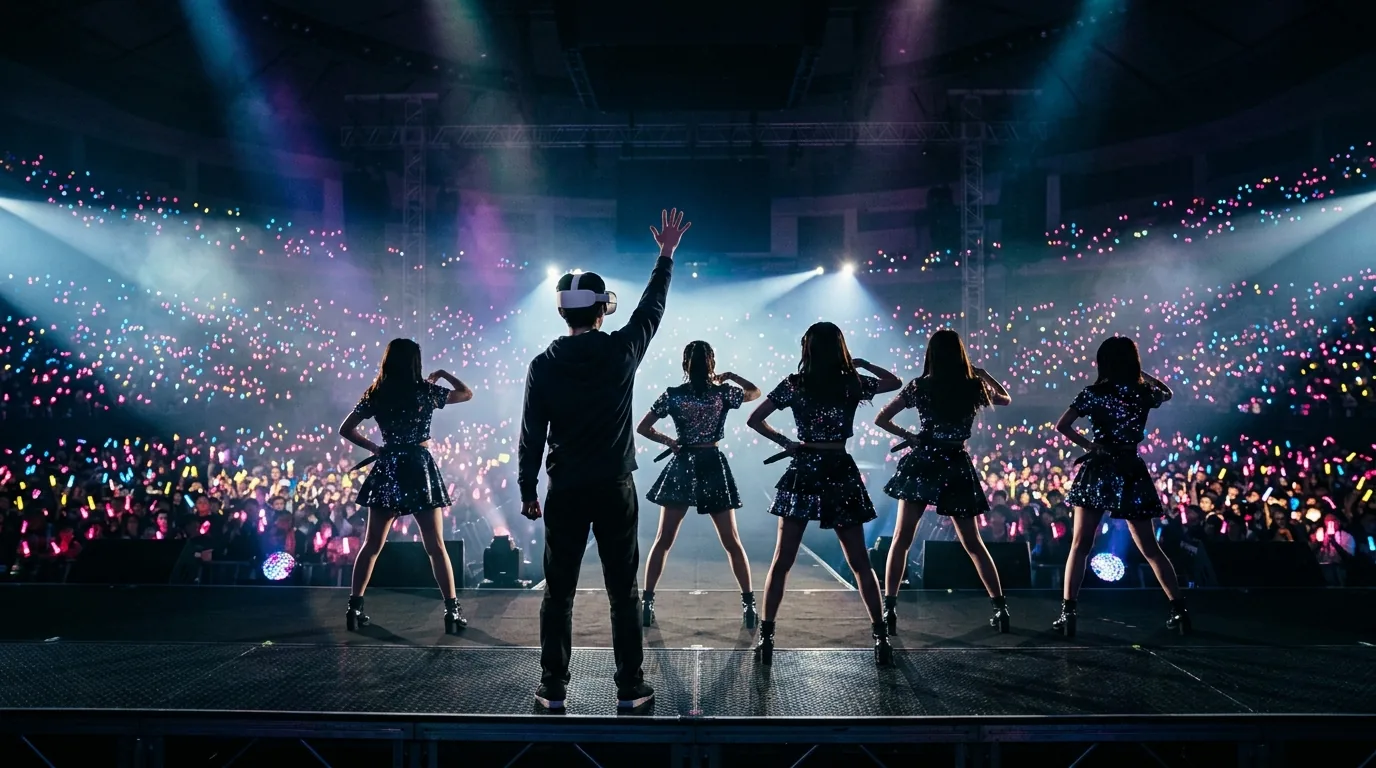
Live concerts: on the stage, not in the audience
Experience a concert by pop idols or other artists from up on the stage. You stand right beside the performers as they sing and dance, and when you turn around, the audience stretches out before you, filled with glow sticks. On your own two feet, you can close a distance that a screen never could.
Motion capture and 4D Gaussian Splatting can preserve the performers' movements exactly as they performed them.
HISTORY
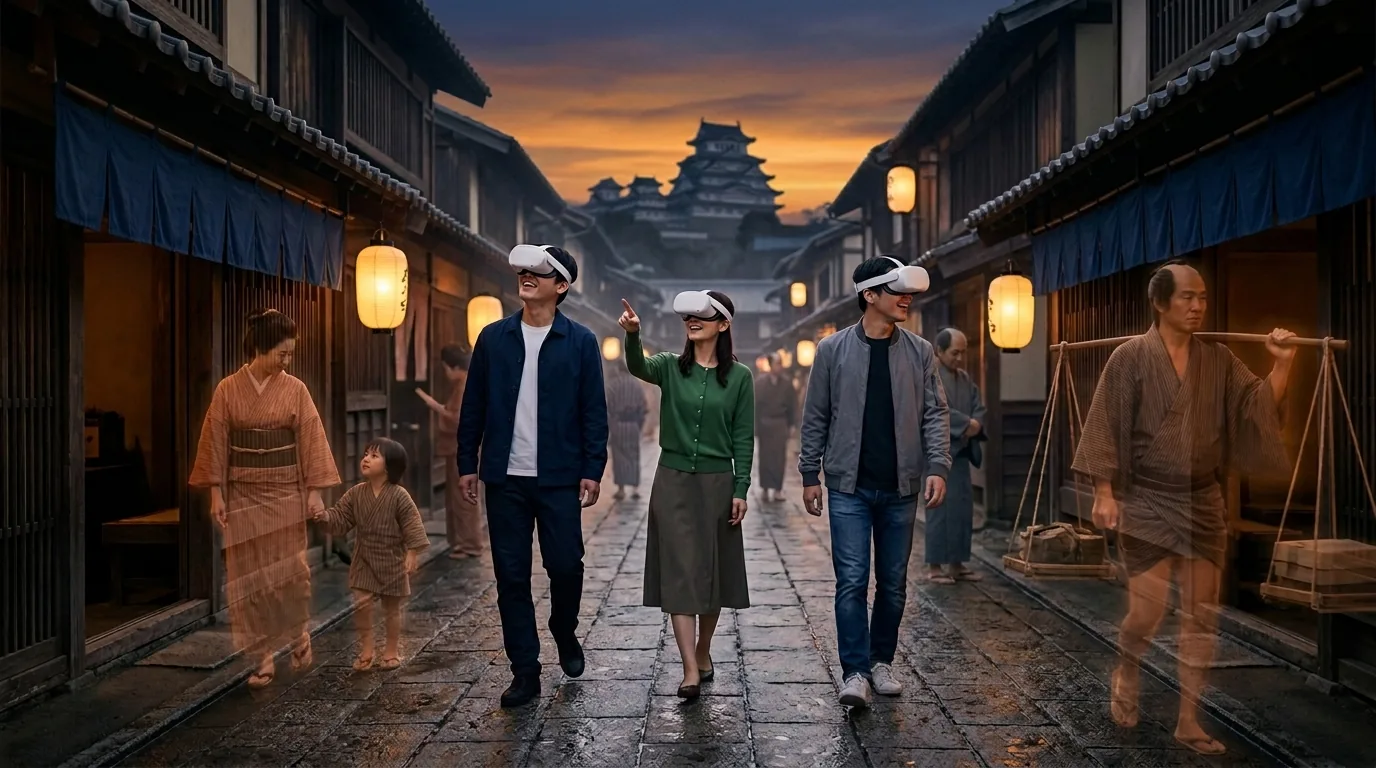
History: walk through a town you have only seen on paper
Walk through a town from several hundred years ago, passing its townspeople as you go. The height of the gate, the width of the street, the lamplight at dusk. You feel with your own body the scale and the distances that timelines and reconstruction drawings could not convey.
One way to build this is to record in 3D the buildings that still stand and to recreate what has been lost on the basis of historical research.
FAR AWAY
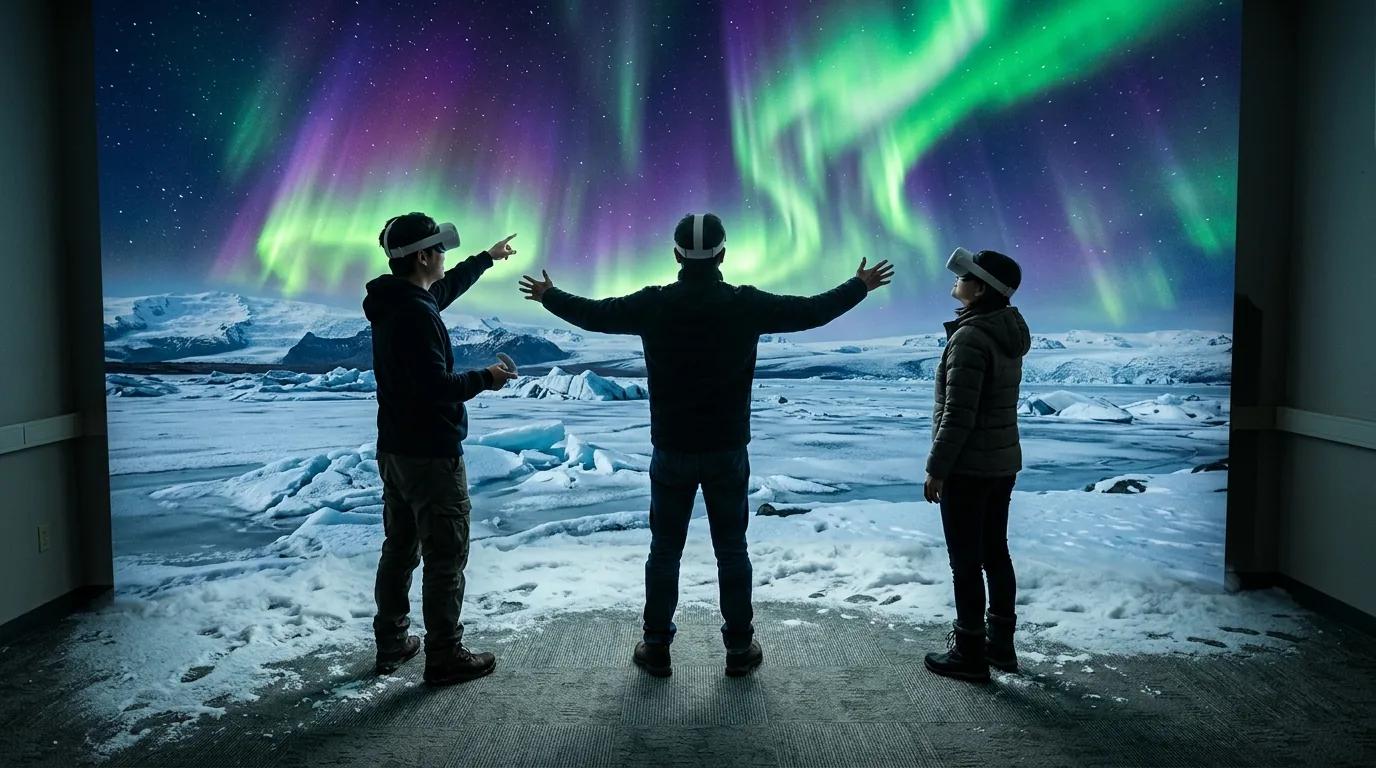
To faraway places, and places you can no longer go
A land that takes days to reach. A place where access is restricted. The same street corner, decades ago. Places set apart by distance or time can be summoned into a single room in the city.
It is less a substitute for travel than the thing that makes you think, "Someday I want to go there for real."
These are examples of what location-based XR can do. They do not indicate the content of the titles we plan to announce.
No construction needed: just stick markers on the walls
Location-based XR may bring to mind dedicated facilities and large-scale equipment. A major feature of the experiences we are involved in is how little preparation the venue needs.
All you need is QR markers stuck on the walls. These black-and-white square markers go up in several places around the room, about ten in all. No work is needed on the floor, walls, or ceiling. No set has to be built either.
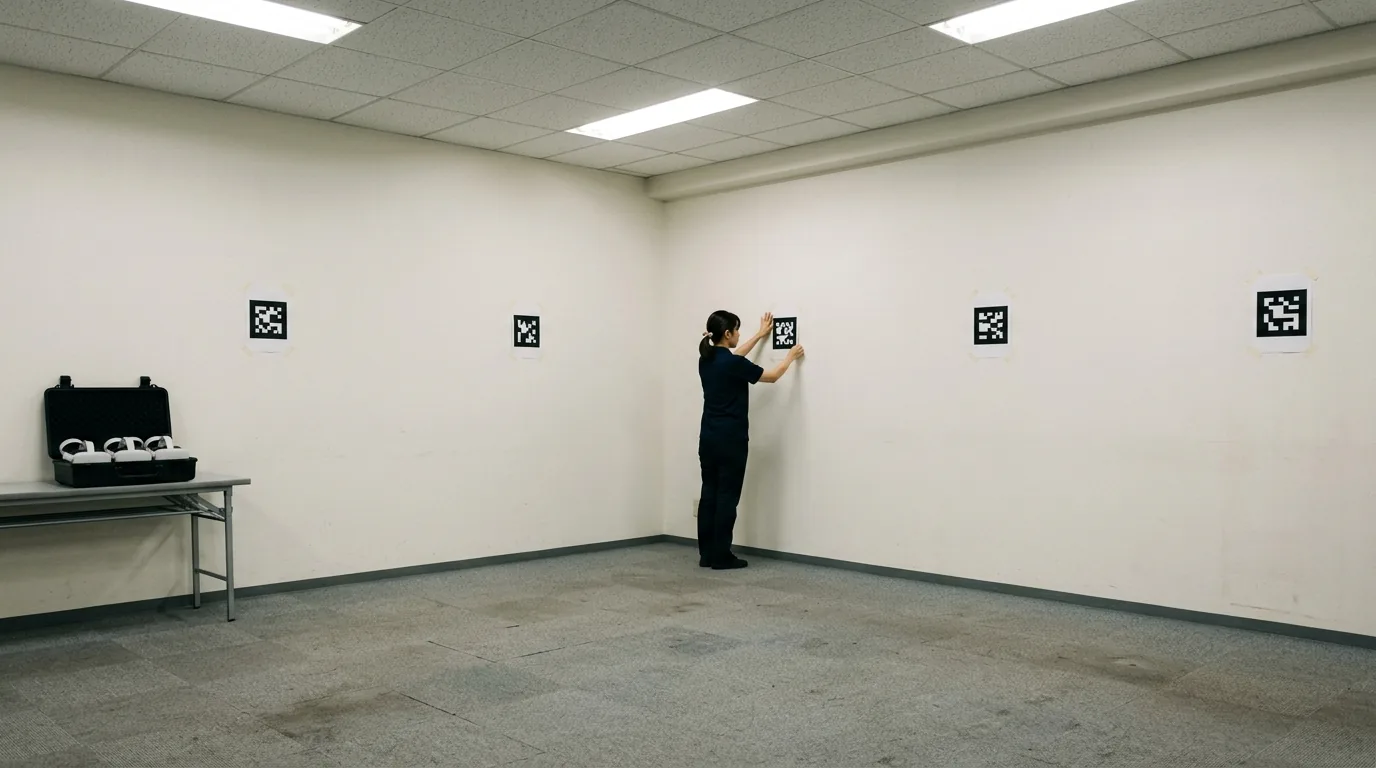
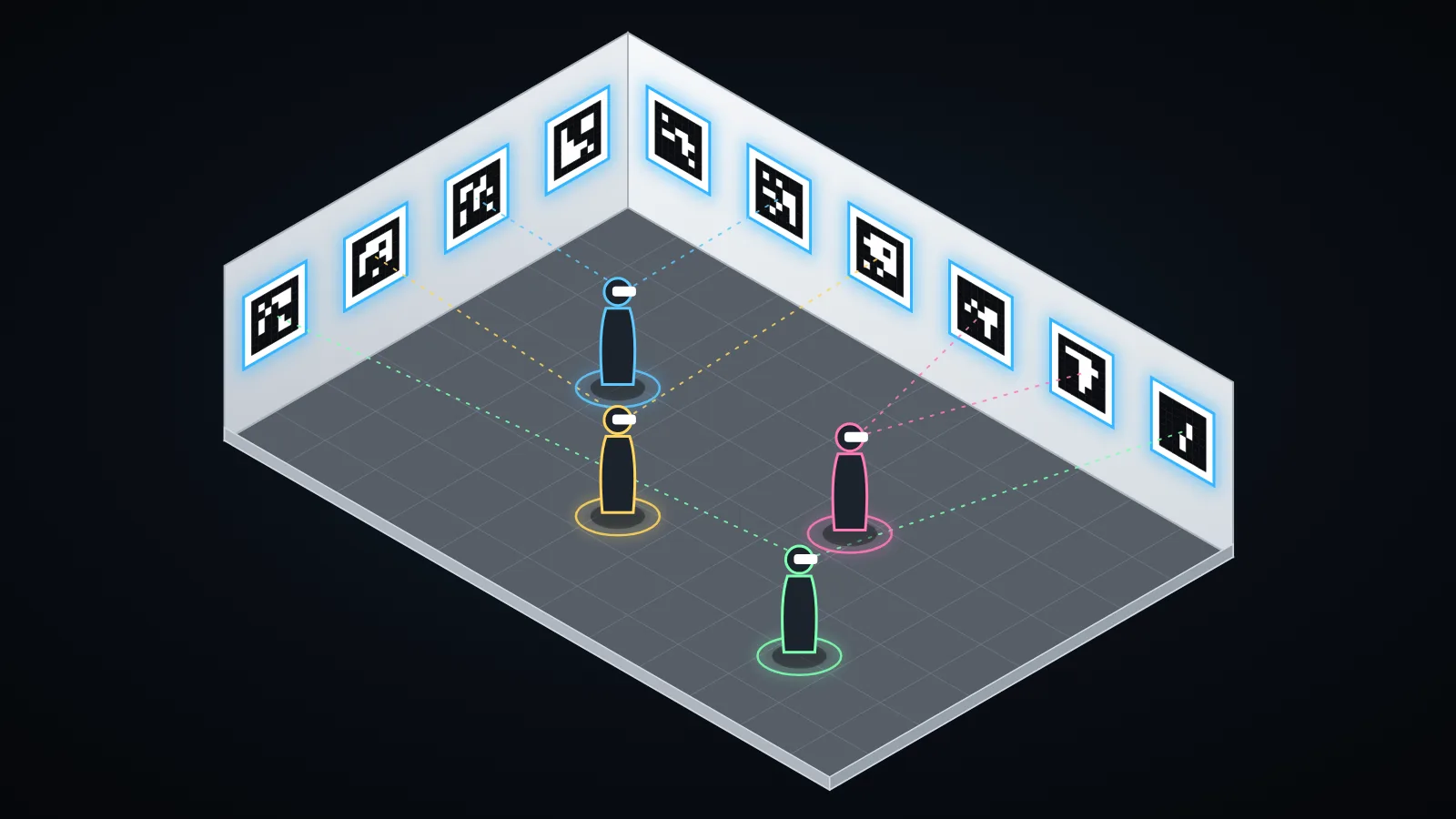
The markers are reference points that let each headset work out where in the room it is right now. Because everyone's headset sees the same reference points, the positions of the people taking part together line up too.
- An unused room becomes the venue as is: multipurpose halls, event spaces, meeting rooms, vacant units in shopping centers, and so on.
- Quick to set up and take down: stick the markers up to start, peel them off to finish. It also suits short-run events and events that move from venue to venue.
- Easy to start even in a rented space: because there is no construction, it can be brought in without altering the building.
We go over the venue requirements, such as the space needed, in advance.
What changes for a venue
Location-based XR is a new option not only for the people who experience it, but also for those who have a space.
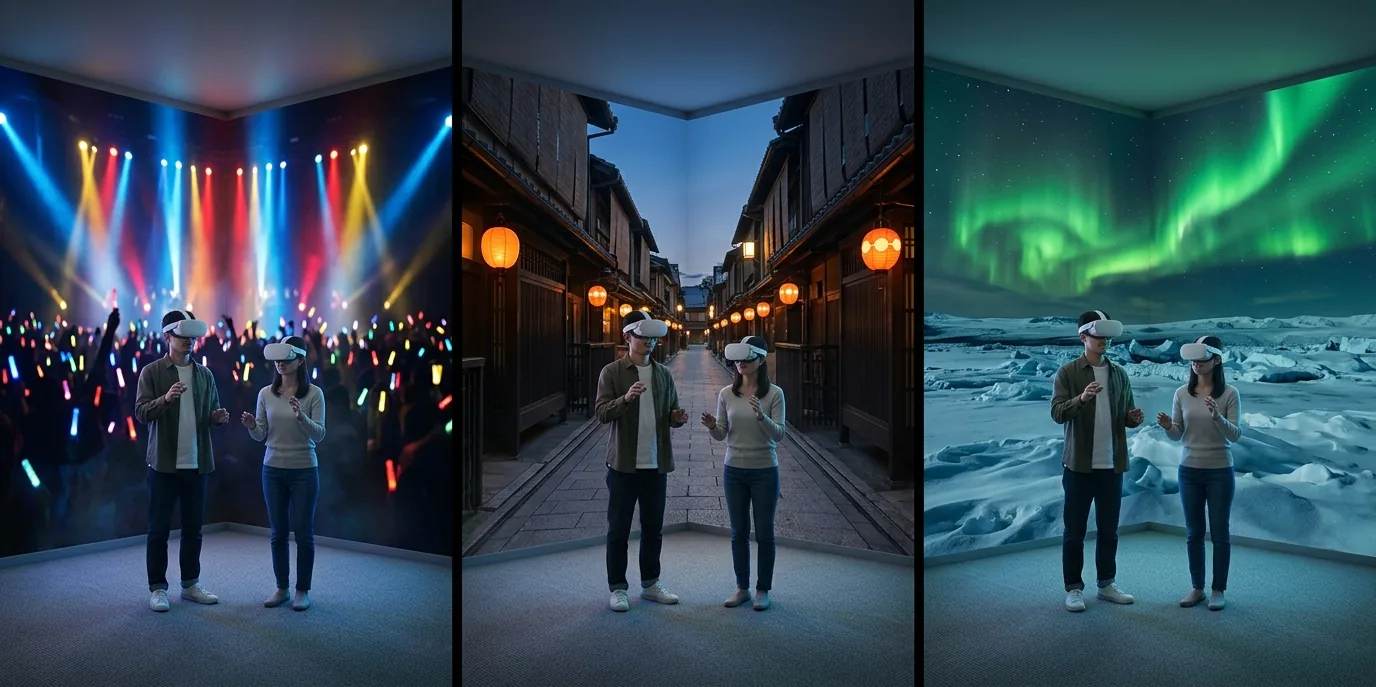
- The space itself becomes the content: with no set to build, an entirely different world can rise from the same floor space.
- Titles can be swapped: change the title and you can offer a different experience in the same place. That makes it easier to tailor what you offer to the season or to a particular event.
- It can take people where they cannot go: distant lands, places that are off limits, landscapes that are now lost. Experiences that used to require traveling to the site can be offered at a venue in the city.
- Culture and stories can be conveyed as an experience: scale, depth, and atmosphere, which are hard to get across in explanatory text or video, come through when you walk.
What IZUTSUYA does
We take part in location-based XR titles in four roles, from planning through to operation.
- Planning and producingWhat kind of place, who it is for, and what they will experience. We work out the framework of the experience together with the people who have the subject matter and the people who have the space.
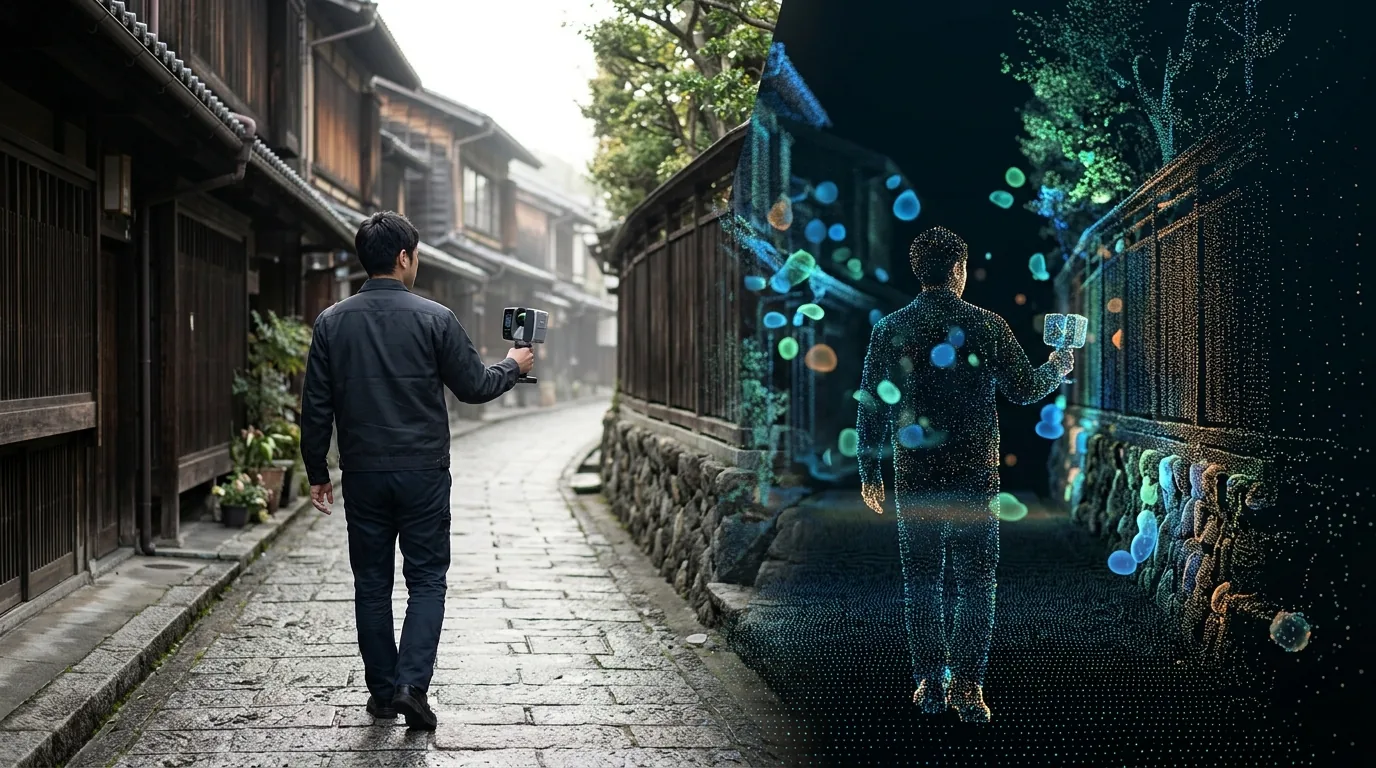
- Capturing real places in 3DWe capture real-world places with 3D Gaussian Splatting and LiDAR. Buildings and streetscapes become the setting for the experience, light and texture included.
- Capturing human movementWe turn human movement into data with the markerless motion capture system AR51 and with 4D Gaussian Splatting, which preserves the motion itself.
- Development and operationTogether with our partners, we handle everything from developing the content to running it at the venue.
Bringing real places and people into the experience
The world of an experience can be built entirely in CG. Our focus is on bringing in real things just as they are.
A real place becomes the setting
Since 2024, we have been recording buildings, cultural properties, and streetscapes with 3D Gaussian Splatting. The data looks close to a photograph and can be viewed at eye level, as if on foot. That lets a real place serve as the setting for an experience.
3D digital archiving of cultural heritage What is Gaussian splatting?
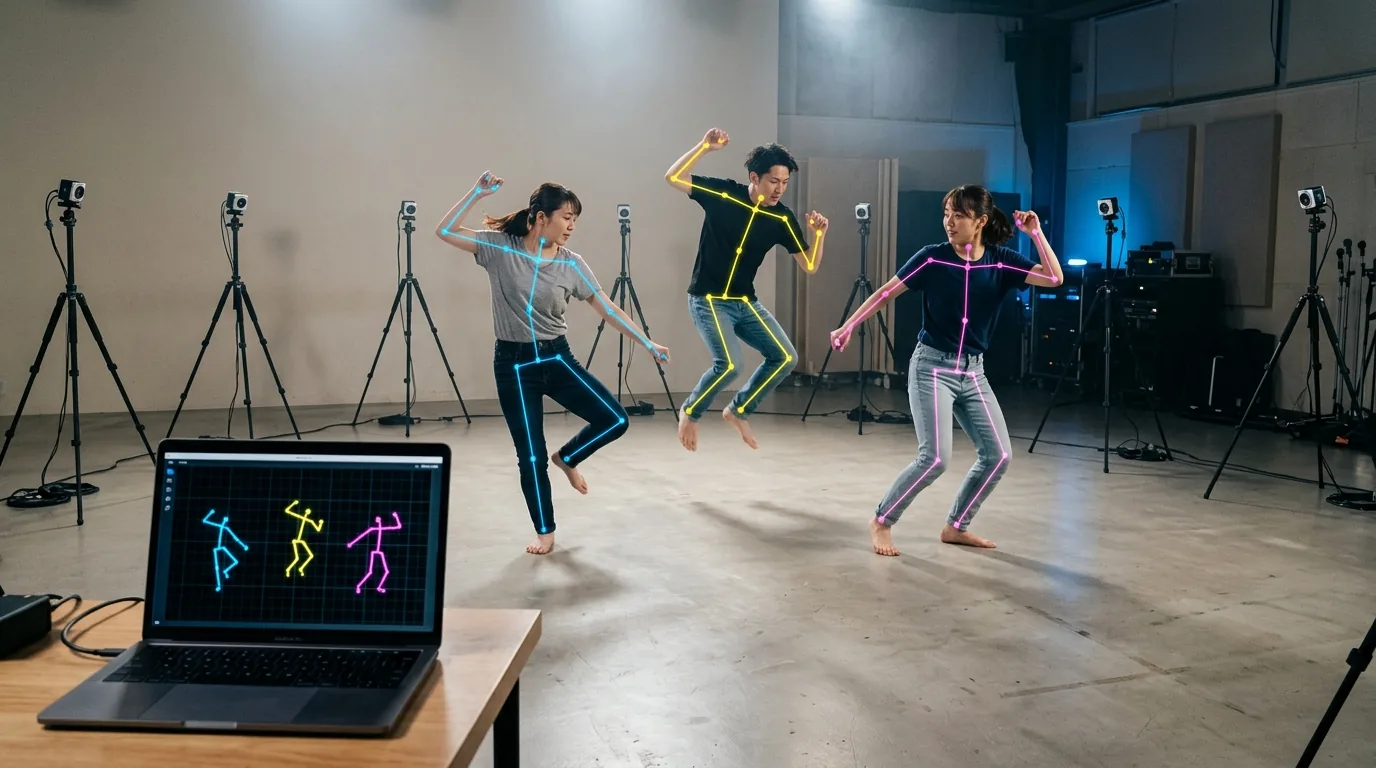
People's movement, reflected on the spot
AR51 is a motion capture system that can capture the movement of more than 100 people at once, with no markers and no suits. It can be used both to reflect participants' movement in the experience and to record performers' movement.
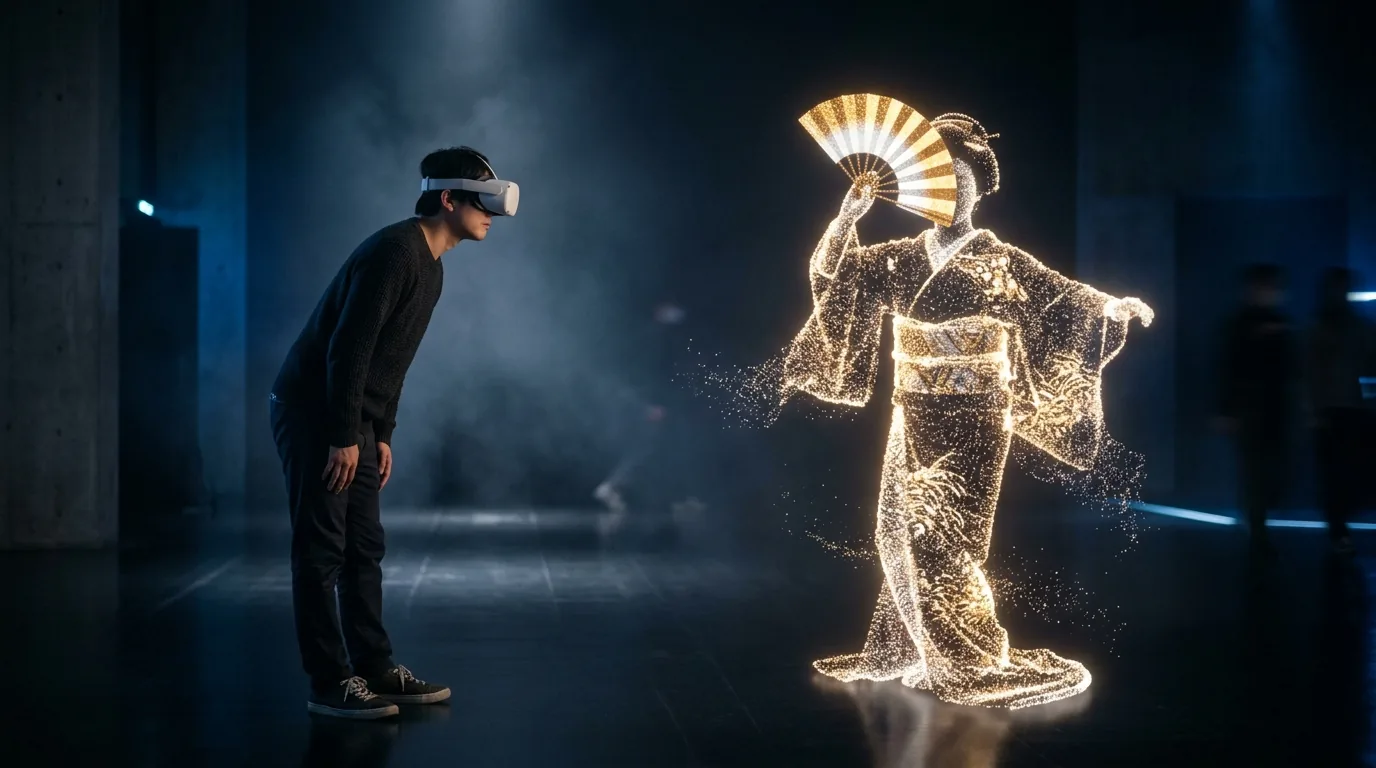
Dance and formal gestures, right before your eyes
4D Gaussian Splatting is a technology that records human movement in three dimensions and plays it back from any angle you like. Dance, traditional performing arts, and the movement of an artisan's hands can be built into the experience as events happening right in front of you.
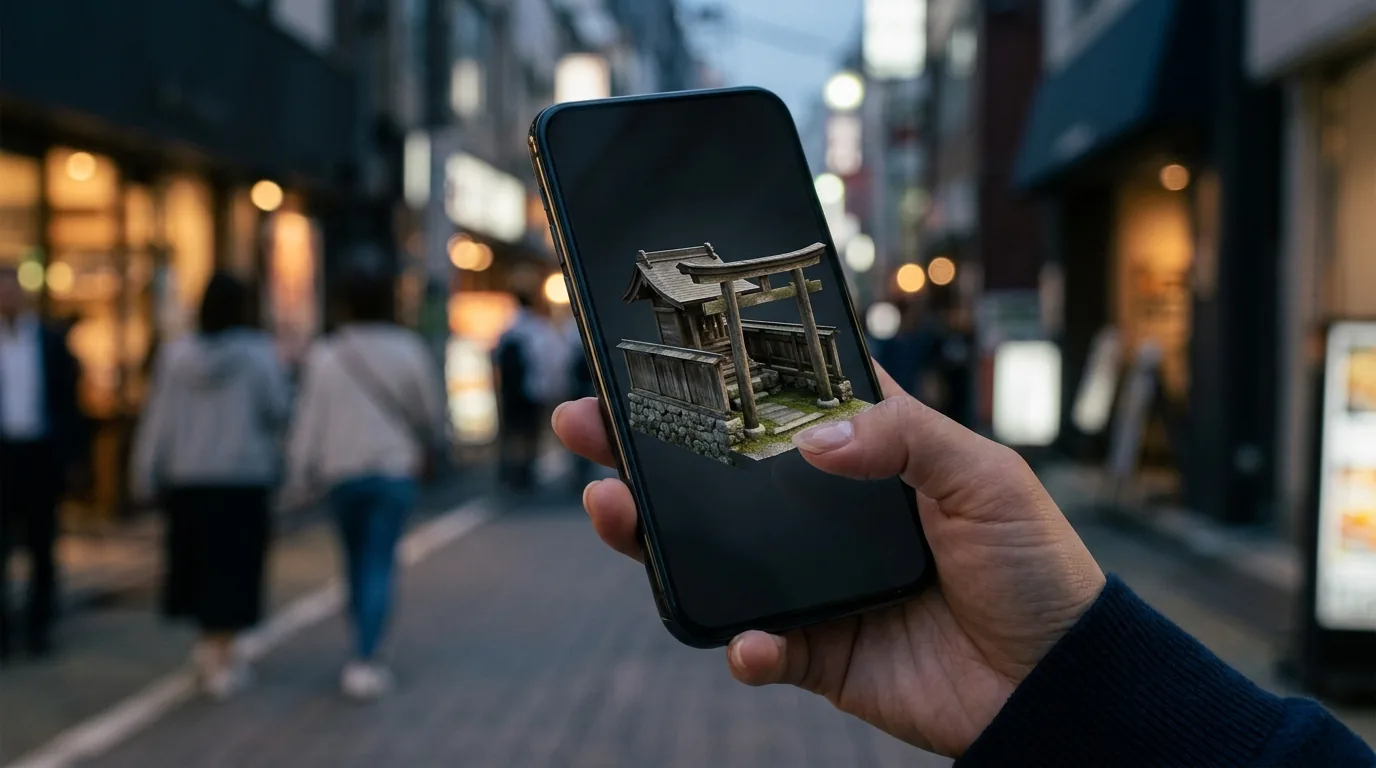
An entry point outside the venue, too
The places and movements we record can also be published on the web through 3Dasset.io and 4DGS.jp, which we operate. People can explore the 3D data from an official website or social media, and that can lead them on to the experience at the venue.
The places and movements we have recorded and preserved become the raw material for experiences, just as they are. Archiving and entertainment are seamlessly connected, and that is the foundation of our location-based XR.
Upcoming announcements
We are currently involved in several location-based XR titles. We will announce them one after another, starting in the second half of 2026.
The content, venue, and timing of each title will be given in its own announcement. The latest information will be posted in the News section of this site.
Without a headset: Location VR GATE
There is also a headset-free format. "Location VR GATE" is an experience in which you hold up a handheld device and the place in front of you appears to turn into another world. The people taking part do not need to wear markers or suits, and it is easy to set up on site at exhibitions and events.
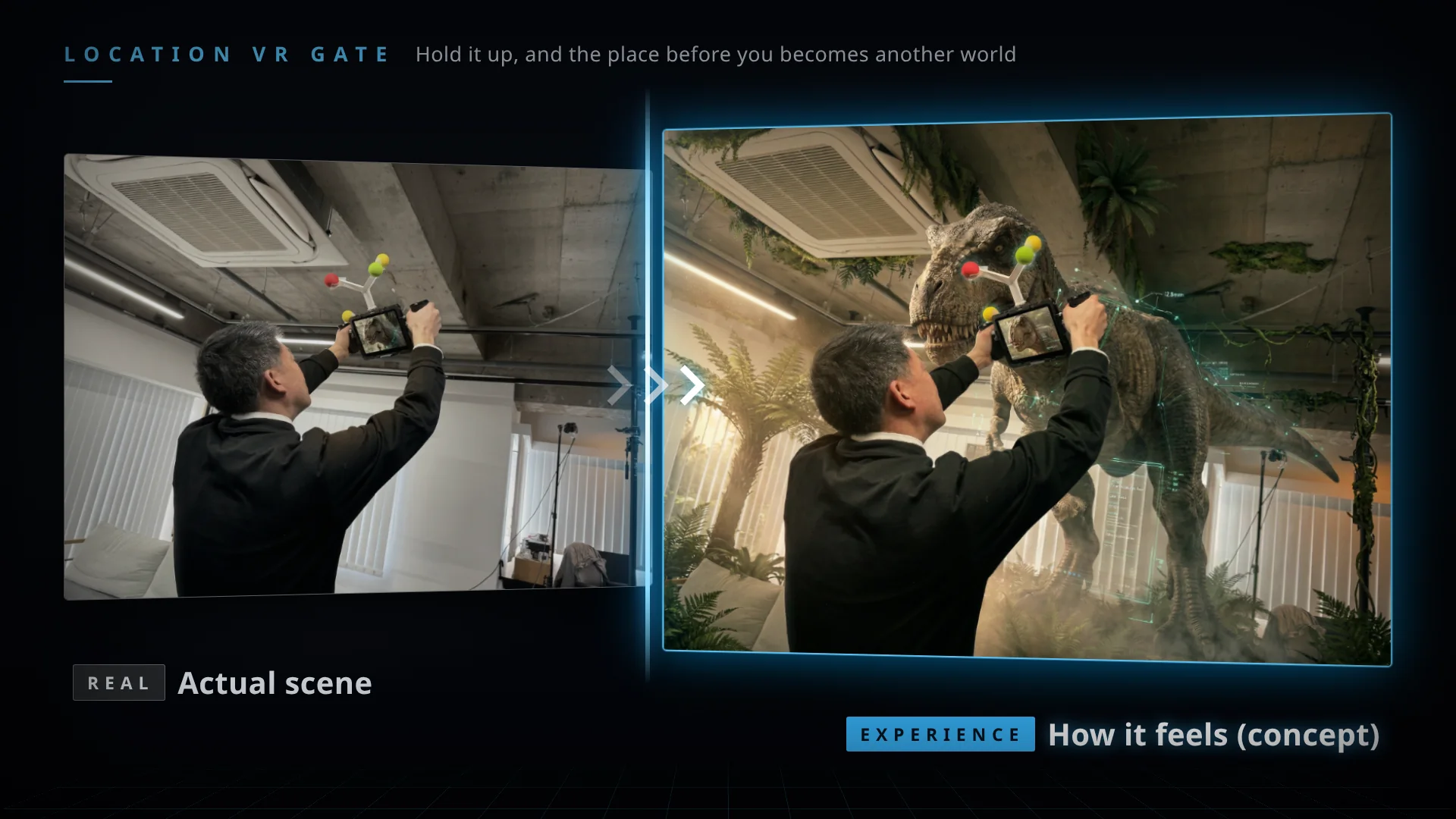
When to choose it
This is an option if you want to try location-based XR out first, or use it at a short-run event. For details, see the Location VR GATE announcement.
Get in touch
We are happy to hear from you in any of the following cases. It is fine if you are still at the idea stage.
- If you have a space: a shopping center, cultural institution, tourist destination, or the like, looking for new ways to use your space.
- If you have subject matter: a work, a character, an artist, or a piece of history or culture that you want to deliver as an experience.
- If you are a local government or organization: looking to turn your region's culture and landscapes into a reason to visit.
Talk to us about location-based XR
The conversation moves faster if we know the size of the space, the subject matter, and the visitors you have in mind. It is fine if some of these are not decided yet.
Frequently asked questions
What is location-based XR?
It is XR that you go to a facility or venue for and experience by actually walking around. We call an experience location-based XR when it brings together three things: place, human movement, and sharing with the people you are with.
How is it different from home VR?
Home VR is mostly enjoyed standing in one spot or sitting down. In location-based XR, you walk through a large space on your own feet and experience the same world as the people you came with.
Does the venue need any construction work?
No. Just stick about ten QR markers on the walls and the room can be used as a venue. We go over requirements such as the space needed in advance.
What subjects can you build an experience around?
It works with any subject. Examples include a concert experienced from up on the stage, a history experience in which you walk through a town of the past, and a visit to a distant land or a place you cannot go to now.
Do I need a headset?
Titles that you walk through use a headset. There is also a headset-free format, "Location VR GATE," which you experience by holding up a handheld device.
Can a real place be used as the setting for an experience?
Yes. We capture the real-world place with 3D Gaussian Splatting and use it as the setting for the experience. We will propose an approach, starting with the capture method, to suit the subject and your goals.
When and where can I experience it?
We are preparing several titles and will announce them one after another, starting in the second half of 2026. Venues and timing will be given in each announcement.
Can you create an experience using our own facility or subject matter?
Please get in touch. Once we have heard about the size of the space, the subject matter, and the visitors you have in mind, we will propose how to proceed.
Summary
Location-based XR is entertainment in which place and human movement become the experience itself. You walk on your own feet and step into the same world as the people you came with. That kind of fun cannot be had in front of a screen. Preparing the venue takes nothing more than sticking markers on the walls.
We bring to these experiences the technology for preserving real things that we have built up through 3D Gaussian Splatting and motion capture. The titles we are involved in will be announced one after another, starting in the second half of 2026.
Related reading
The company behind this page
IZUTSUYA Inc. (Chuo-ku, Tokyo). We have been doing 3D scanning with 3D Gaussian Splatting since 2024, and operate the 3D data platform 3Dasset.io and the 4DGS streaming platform 4DGS.jp. We run three businesses: culture, infrastructure, and entertainment.